Four Hours, Five SIMs, One East Coast Line: A King's Cross to Edinburgh Signal Diary
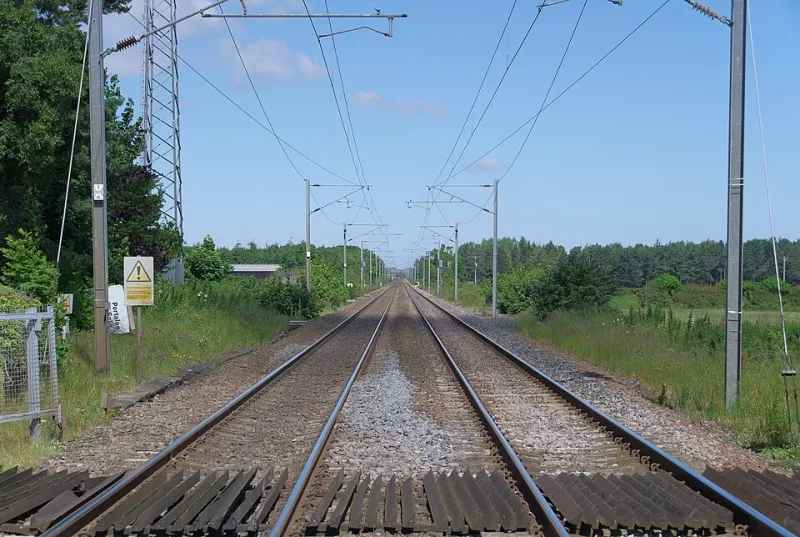
Photo: mattbuck (category), CC BY-SA 4.0, via Wikimedia Commons
The East Coast Main Line is a brilliant test lab for a SIM because it refuses to be consistent. You get fast city coverage, long rural stretches, busy stations, short tunnels and a lot of handovers between masts. On paper every network covers the route. In practice, your phone spends four and a half hours proving the map wrong in small ways.
I rode from King's Cross to Edinburgh Waverley on a weekday in autumn 2026 with five SIMs: EE, O2, Vodafone, Three and a data eSIM running on a major network. This was not a lab test. It was one journey, one handset setup and a lot of notes. I rotated the SIMs between a main phone and two loaner handsets, so treat the results as a practical diary rather than a scientific ranking.
How I tested
At each station stop and during each leg I ran the same checks: load a news page, stream a 60-second video, make a two-minute work call, upload a photo and see whether Wi-Fi calling was available. I also watched for the less glamorous stuff: how quickly data came back after a tunnel, whether a call held during a handover, and whether the phone clung to a weak signal instead of moving to a stronger one.
That last point matters. A single bar that still loads a page is better than four bars that do nothing. Bars are a vibe, not a measurement.
King's Cross to Peterborough: the warm-up
This leg is busy, fast and mostly kind to phones. All five SIMs had usable data around King's Cross and up through Stevenage. The difference came in the gaps between towns, where one network briefly dropped to nothing while the others held a slow but usable connection. Streaming was fine on all five. A work call was clear on three and slightly robotic on two, which is the sort of detail that never shows up on a coverage map.
Peterborough to Doncaster: the first real test
The middle of this stretch is where the route stops being a city commute and starts being a proper test. Around Grantham and Newark the signal gets patchier, and cuttings can swallow a connection for a few seconds. Two SIMs recovered almost instantly. One took closer to half a minute. The eSIM behaved much like the plastic SIM on the same network, which is a useful reminder that eSIM is not magic. It is the same network underneath.
This was also where I noticed how much handover quality matters. A phone that holds a call through a weak patch is worth more than one that hits a huge speed test result at a station and then gives up between masts.
Doncaster to York: the pleasant surprise
Short hop, good result. All five SIMs managed smooth data through Doncaster and York, and the approach into York was one of the better bits of the journey for video. If you mostly travel this section, you are unlikely to have a horror story. The caveat is station crowding: at a busy stop, data can slow down even when the signal looks strong because everyone else is doing the same thing.
York to Newcastle: the long middle
This is the leg I would warn a friend about. It is not bad, but it is uneven. Darlington and Durham were fine. The gaps between them were where the differences showed. One network dropped data for about 90 seconds near Chester-le-Street. Another held data but struggled with uploads. A work call held on two SIMs and dropped on one. Wi-Fi calling was available on most of the handsets, which saved a call when the mobile signal vanished for a moment.
That is the practical lesson: if you take work calls on the train, Wi-Fi calling is not a bonus feature. It is the safety net.
Newcastle to Berwick: the quiet bit
Northumberland is beautiful and stubborn. The route has long stretches where the phone has to work harder, and this is where the cheaper or more congested networks can feel it. Streaming buffered more often. Page loads took a few extra seconds. One SIM lost data near Alnmouth while another held a slow connection. None of this was catastrophic, but if you are trying to join a video meeting on this stretch, give yourself a backup plan.
Berwick to Edinburgh: coast, cuttings and the final approach
The last leg is a mix. There are good patches along the coast and then the final approach into Waverley, where tunnels and cuttings can cut you off just as you are trying to send that last message. All five SIMs had a brief blackspot on the approach. The difference was recovery time. Three came back quickly. Two took long enough that I would not rely on them for a live call into Edinburgh.
What mattered more than bars
Handover quality beat peak speed. A SIM that switches smoothly between masts is more useful than one that wins a speed test at a station. Station congestion is real. Wi-Fi calling is genuinely useful on this route. eSIMs are convenient, but they do not fix a weak network. And train Wi-Fi is still a lottery, so do not build your working day around it.
Picking a SIM for this route
Start with the parts of the journey you actually travel most. If you are mostly London to Peterborough, you have more good options. If you do the full run regularly, prioritise a network that holds calls and recovers quickly from blackspots. A cheap one-month SIM is a sensible way to test before you commit to a longer deal. Check the coverage map, but treat it as a rough guide rather than a promise. And if you work on the move, make sure your phone and network support Wi-Fi calling.
No single SIM won every leg on this trip. The honest answer is that the East Coast Main Line rewards a sensible backup plan more than blind loyalty to one logo.