One Bar Left: Keeping a UK SIM Alive Through a Winter Power Cut

Photo by Photo by Winston Tjia on Unsplash on Unsplash
Every winter the same thing happens: a storm gets a name, the forecast turns red, and half the country stocks up on bread. What far fewer people do is think about the small plastic-and-silicon rectangle that decides whether they can call for help at 2am when the power's been off for nine hours.
A single SIM means a single network. And a single network means a single set of masts, a single set of backhaul links and a single set of engineers trying to reach a flooded substation in the dark. That's a lot of eggs in one basket.
This isn't a scare piece. Most UK outages are short and most masts stay up. But the ones that aren't short are exactly the ones where your phone matters most, so it's worth ten minutes of prep now rather than a cold fumble in a dark hallway later.
What actually happens to the network in a storm
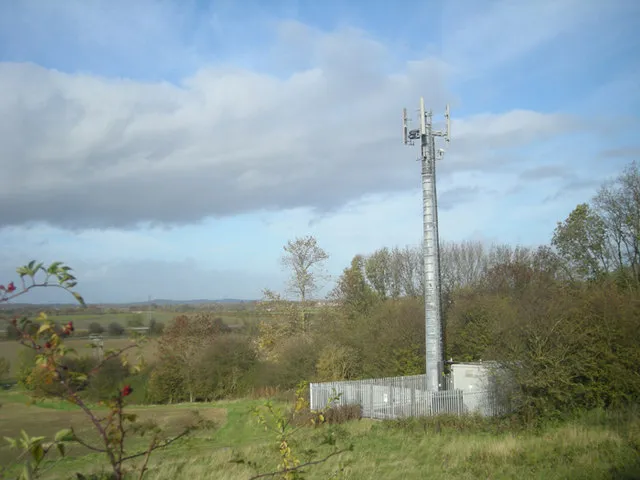
Masts aren't as fragile as people assume. Most have battery backup good for a few hours, and key sites have generators. The weak points are elsewhere: the fibre and microwave links that carry traffic back to the core network, and the local power that keeps exchange equipment alive.
When a site does drop, the network doesn't treat all traffic equally. Emergency calls get priority, and the remaining capacity gets shared out — which is why, in a genuinely busy outage, your WhatsApp voice note may hang while a short text sails straight through. Texts are tiny. They're also stored and retried, so they often get through when a call won't.
There's also the domino effect. If one operator's mast loses power and a rival's doesn't, you get a very local, very confusing picture: full bars in one spot, nothing two streets away. That's the whole argument for a backup on a different network — not because any network is bad, but because they fail in different places at different times.
The mast isn't the only thing that dies
Here's the bit people miss. Wi-Fi calling is brilliant, and it will absolutely keep your number working when the local mast is down — right up until the broadband router loses power too. In a wide power cut, those two things tend to happen together.
So Wi-Fi calling is a tool, not a guarantee. It works if your router's on a battery backup, if you're at a friend's house in a luckier postcode, or if you've got a mobile hotspot feeding it. Keep it switched on anyway — it costs nothing and it switches in automatically when the signal's poor. Just don't build your whole plan around it.
The other quiet killer is your phone's own battery. Searching for a signal in a weak-coverage area drains a handset far faster than sitting on a strong one. A phone at 12% in a dead zone is a phone that'll be off in twenty minutes.
Pick a backup that's genuinely a backup
This is where a second eSIM earns its keep, and it doesn't need to be expensive. A handful of pounds a month, or a pay-as-you-go data pack, is plenty. The trick is picking one that runs on a different physical network from your main SIM.
The UK still has four sets of masts underneath all the branding: EE, Vodafone, Three and O2. Most smaller brands are riding on one of those four. So the question to ask isn't "which brand is cheap?" but "whose towers does it use?" If your main SIM is on O2, a cheap eSIM on EE gives you an actual second chance. Two MVNOs on the same host network give you almost nothing.
A modern handset holds several eSIMs at once and you can flip between them in settings in about fifteen seconds. Worth testing that switch before the storm, in daylight, with a cup of tea — not by torchlight.
One caveat: buying and activating an eSIM needs an internet connection. Sort it out on a calm Tuesday, not during a red warning.
The pre-storm checklist
- Charge everything. Phone, power bank, earbuds case, laptop. A charged laptop is a very large phone battery if you need it.
- Download offline maps for your area and the route to your nearest hospital.
- Screenshot your important numbers — GP, insurer, landlord, family. If your phone dies and you borrow one, you'll want them without a login screen in the way.
- Write down your own number. Sounds daft. Try recalling it under stress.
- Register for 999 by text if you might not be able to speak. It's a free SMS registration with the emergency services and it takes two minutes.
- Check the battery settings. Low Power Mode on, background app refresh off, 5G off if 4G is fine. Every one of those buys you hours.
- Know your network's status page. All four major operators publish live outage info, and the local electricity distributor will tell you roughly when power's coming back. Bookmark both now.
During the outage
Text before you call. Keep calls short. Turn the phone off entirely if you're not using it — a handset searching for a missing network chews through battery at a startling rate.
If your main network is dead, switch to the backup eSIM and try there. If both are down, join a neighbour's Wi-Fi and use Wi-Fi calling, or ask to borrow a phone on a network that's still standing. Community WhatsApp groups and local Facebook pages are genuinely useful in a long outage — as long as you've got a way online.
And keep a cheap battery FM radio about, if you're the sort of household that likes being prepared. Local BBC radio is still the most reliable thing in a blackout.
The short version
One SIM is a single point of failure, and winter is when that failure gets tested. Keep Wi-Fi calling switched on, but don't rely on it. Buy the cheapest eSIM you can find on a different host network and get it set up in advance. Charge the power bank before the storm has a name. Then, when the lights go out and the bars vanish, you've got a second chance in your pocket rather than a dead rectangle and a cold walk to the nearest phone box — assuming you can find one.