Silent for Six Months: How Long a Spare UK Number Really Survives in a Drawer
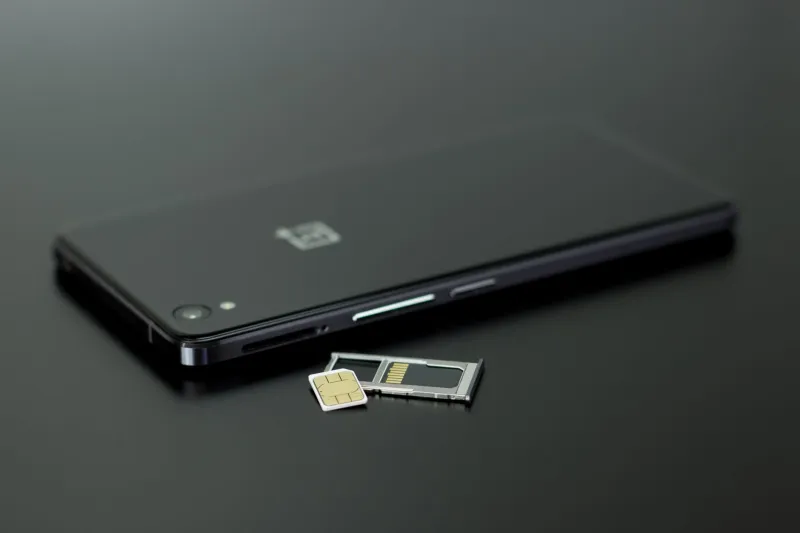
Photo: Arietta, CC BY-SA 4.0, via Wikimedia Commons
Most of us own at least one phone number we don't really use. It lives in a drawer, in an old handset, or as a second eSIM that only wakes up when a one-time passcode needs somewhere to land. It feels permanent — it's your number, after all.
It isn't permanent. It's on a clock, and the clock is usually shorter than people assume.
The number you never use is the one most likely to vanish
Across UK pay-as-you-go, there's no single nationwide rule that says how long a dormant number must be left alone. Each provider sets its own inactivity window and writes it into terms and conditions that almost nobody reads. In practice those windows cluster somewhere between 90 days and six months — which means a SIM you topped up in the spring can be dead before Christmas.
When the window closes, the number doesn't just stop working. It gets disconnected, then recycled, then handed to somebody else. That's the bit that catches people out, because the fallout arrives months later: a banking app that suddenly won't send a code, a two-factor login that fails, a relative who rings a stranger.
What actually counts as "activity"
This is where the trap really sits. Networks don't measure whether you like your number. They measure chargeable use on their network.
Broadly speaking, the things that tend to count are:
- an outgoing call that connects (even for a few seconds)
- an outgoing text
- a data session that runs over mobile data rather than Wi-Fi
- a top-up, on some providers but not all
And the things that usually don't:
- receiving a text, including a bank verification code
- an incoming call you don't answer
- sitting on Wi-Fi with the SIM in the phone
- having credit sitting on the account
- owning the number for years and being fond of it
That last distinction is the whole problem in one line: a SIM whose only job is to receive security codes is, from the network's point of view, completely idle. It's doing nothing. It's just sitting there, absorbing texts, waiting to be reclaimed.
The rough timelines, network by network
Indicative only — these get quietly rewritten, and the small print is the only version that counts. Treat the table as a prompt to go and check, not as gospel.
| Provider | Typical inactivity window before disconnection |
|---|---|
| EE | around 6 months |
| O2 | around 6 months |
| Vodafone | roughly 3–6 months, depending on plan |
| Three | around 6 months |
| giffgaff | around 6 months, with warnings by text first |
| Tesco Mobile | around 6 months |
| Lebara | around 90 days |
| SMARTY | around 6 months |
| iD Mobile | roughly 3–6 months |
| ASDA Mobile | around 6 months |
A few providers are better than others at texting a warning before they pull the plug. giffgaff, for instance, is fairly well known for nudging you first. But a warning text is only useful if the SIM is in a phone that's switched on — and half the point of a spare SIM is that it isn't.
The top-up trap
Here's a scenario that plays out constantly. Somebody tops up £10 in January "to keep it ticking over", assumes that's job done, and doesn't touch the SIM again. In June the number is gone.
Why? Because on plenty of tariffs, a top-up extends your credit, not your connection. The credit expiry date and the dormancy clock are two different things running at two different speeds. Adding money can keep the balance alive while doing nothing at all for the number attached to it.
So the phrase to look for in the terms isn't "top-up" — it's "chargeable use" or "chargeable activity". If a provider counts top-ups, great. If it doesn't, you need to actually make something happen on the network.
Two near-misses worth knowing about
A reader in Leeds kept a spare SIM purely for her business bank's verification texts. Two-factor codes arrived every few weeks, so the SIM was clearly "working". It was disconnected after roughly five months, because not one of those texts was outgoing. She only found out when a payment failed in a client meeting.
Then there's the opposite case: someone who kept a Vodafone PAYG number for a parent visiting from abroad, topped it up before each trip, and never made a call. The top-ups kept the credit topped up. The number still lapsed between visits.
The lesson in both cases is the same, and it's not "be more careful". It's that passive use doesn't register.
A keep-alive routine that takes four minutes a year
If you're holding a number for bank codes, a second line, or a relative who rings twice a year, here's a low-maintenance routine:
- Find the inactivity window in your provider's terms. Search the terms page for "inactive" or "dormant". If it's unclear, ask on live chat and screenshot the answer.
- Set a repeating reminder at half that window. Six months becomes a 60–90 day reminder. Now you have slack instead of a cliff edge.
- At each reminder, make one outgoing thing happen. Send a text to your main number. Or switch off Wi-Fi briefly, load a webpage over mobile data, and switch it back. Something that leaves the phone and touches the network.
- Log the date you did it, in a notes app or a calendar event. Otherwise month four and month five feel identical.
- Keep the SIM in a phone that's occasionally switched on if the provider sends warning texts — or accept that you'll never see them and rely on your own calendar instead.
- Do not rely on top-ups alone unless you've confirmed in writing that your provider counts them.
That's genuinely it. The whole exercise is four minutes a year, spread across a couple of reminders.
If it's already gone quiet
If a spare SIM has stopped registering, ring the provider before assuming it's over. There's often a grace period where the account still exists but the service is suspended — sometimes a top-up or a call reactivates it, sometimes it doesn't, and once a number has been reassigned it's effectively gone for good.
If you catch it early enough and the number still works, this is also the moment to consider porting it somewhere you'll actually use it, rather than leaving it to idle again. Moving a number to a cheap ongoing plan, or to a network that's more forgiving about inactivity, beats nursing it along in a drawer.
The one-line version
A dormant number isn't safe because it's yours, and it isn't safe because it still receives texts. It's safe for as long as it's making chargeable use of the network inside your provider's window — and no longer.
Diary it, poke it twice a year, and the SIM in the drawer will outlive most of the phones it's ever been in.